
Harvist Estate,
London Borough of Islington
INSIGHT
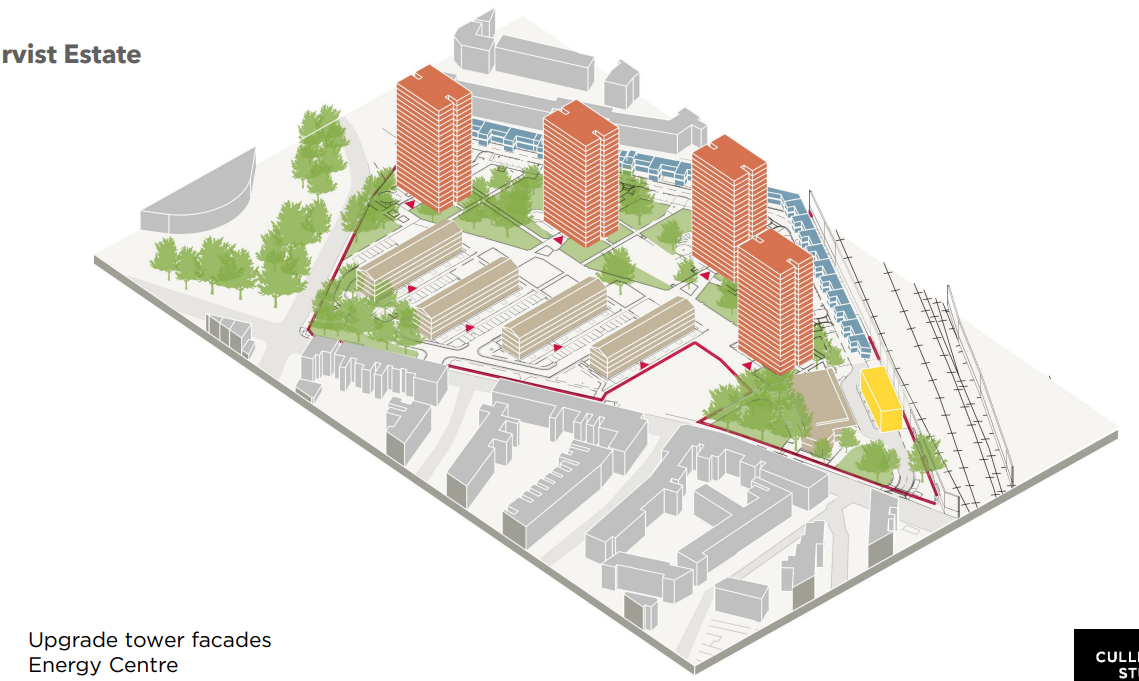
Harvist Estate is a large residential development within the London Borough of Islington, located adjacent to the Emirates Stadium. The estate includes four 18 storey towers and four low rise blocks, totalling over 500 homes.
Originally built in the 1970s using a precast concrete system, the buildings have experienced ongoing performance issues. The existing façade has deteriorated, leading to cold draughts, damp, and overheating during warmer months. Residents are also facing high energy costs due to inefficient electric and gas based heating systems.
The project is classified as a High Risk Building under the Building Safety Act, requiring a carefully managed design and approval process.
IDEA
The project focuses on transforming the performance of the estate through a full retrofit of building fabric and services.
The aim is to replace inefficient, individual heating systems with a centralised heat network, while improving thermal comfort, air quality, and energy efficiency across all homes.
What the project delivers:
This project delivers a comprehensive retrofit strategy that improves living conditions for residents while reducing energy demand.
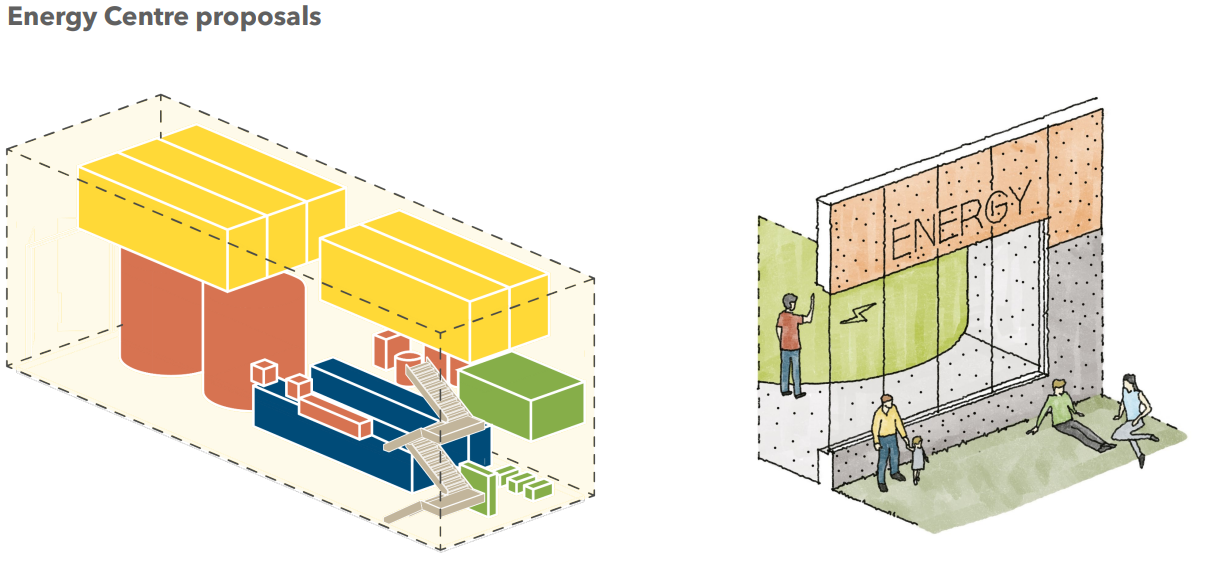
It replaces outdated heating and hot water systems with a new heat network and energy centre, supported by heat interface units in each apartment.
Alongside this, the introduction of a high performing façade and mechanical ventilation with heat recovery improves insulation, air tightness, and indoor air quality, addressing issues of damp and overheating.
OUR SOLUTION
We were appointed to provide MEP design and sustainability consultancy services from RIBA Stage 2 through to Stage 5.
Our role includes site surveys, utilities assessments, and coordination of site wide distribution systems. We have developed the MEP design to Stage 3 and beyond, supported by thermal modelling, occupancy evaluation, and contributions to PHPP modelling.
We are also supporting the two stage design and build procurement process, including involvement during the PCSA period, ensuring the design remains coordinated and deliverable.
IMPLEMENTATION
The retrofit approach centres on removing the existing cladding and replacing it with a higher performing façade to improve thermal performance and air tightness.
Existing electric and gas based systems are being replaced with a new heat network connected to a central energy centre, with HIUs installed in each apartment. Mechanical ventilation with heat recovery is introduced to maintain air quality and prevent issues such as damp following the improvements in air tightness.
The design has been developed within the constraints of the existing structure, including limited capacity for additional load and restricted routes for new services. All works are planned to be delivered while residents remain in their homes, requiring careful coordination and phasing.
We have also addressed complex site wide challenges, including below ground services, future development plans, and flood risk considerations, ensuring the heat network and energy centre are integrated effectively within the wider scheme.
Ongoing engagement with the client and residents has been key, supporting a smooth progression into Stage 1 of the procurement process and building confidence in the proposed solution.